Flat Roof vs. Shingle Roof: Pros and Cons

Flat roofing and shingle roofing solve the same basic problem—protecting a building from weather—but they manage water in different ways and suit different roof shapes. The right choice depends first on slope and drainage, then on the building's use, existing structure, detailing, maintenance plan, appearance, and long-term ownership goals.
This comparison explains the practical differences for property owners in New Jersey, New York, and Pennsylvania. It is not a substitute for an on-site roof assessment because existing decks, penetrations, insulation, drainage, and local requirements can change the appropriate system.
What Is a Flat or Low-Slope Roof?
A roof described as “flat” normally has some slope so water can move toward drains, scuppers, or gutters. Instead of relying on many overlapping pieces, most low-slope systems use a continuous or carefully seamed membrane. Common categories include single-ply membranes such as TPO or EPDM and modified-bitumen assemblies.
Low-slope roofs are common on commercial buildings, multifamily properties, additions, porches, and modern homes. They can accommodate rooftop equipment efficiently, but every penetration, edge, transition, and drainage point needs proper detailing. Learn more about our flat roofing services.
What Is a Shingle Roof?
Asphalt shingles are installed in overlapping courses on a sloped roof. Gravity helps shed water down the roof surface, while underlayment, flashing, starter materials, ventilation components, and edge details complete the assembly. Architectural asphalt shingles are widely used on homes because they work with many roof shapes and are available in varied colors and profiles.
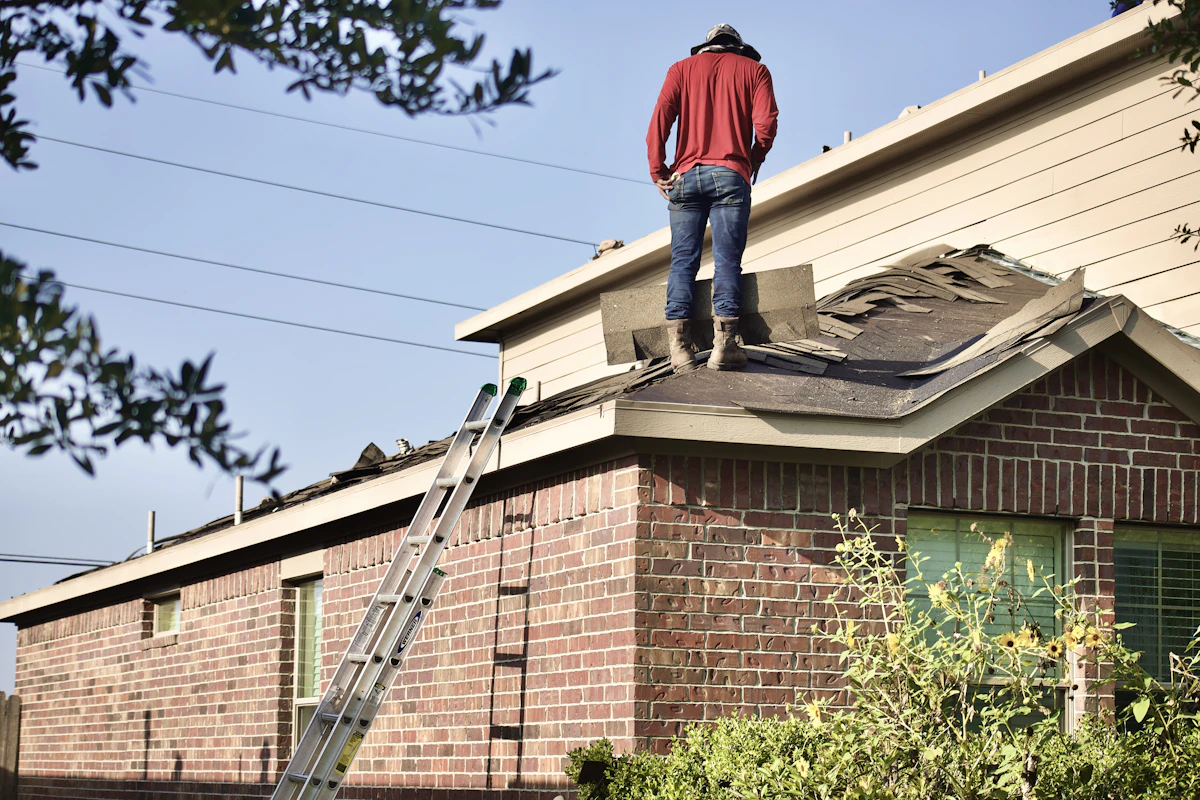
A shingle roof is a complete system, not just its visible shingles. Valleys, wall intersections, chimneys, vents, skylights, eaves, and ridges are frequent trouble spots when components are missing, aged, or poorly integrated. Our shingle roofing page covers this service in more detail.
Flat Roof vs. Shingle Roof at a Glance
| Factor | Flat or low-slope system | Asphalt shingle system |
|---|---|---|
| Typical roof form | Flat or low-slope decks | Sloped residential-style roofs |
| Water strategy | Membrane continuity and designed drainage | Overlapping materials that shed water downslope |
| Common uses | Commercial roofs, additions, multifamily and modern designs | Homes and other buildings with sufficient roof slope |
| Appearance | Often minimally visible from the ground | Prominent part of exterior design |
| Access and equipment | May accommodate equipment, subject to design and protection | Not intended as a service platform |
| Maintenance focus | Drains, seams, penetrations, flashing and membrane condition | Shingles, flashing, valleys, ventilation and edge condition |
Slope and Drainage Usually Decide the System
Roofing products have minimum slope and installation requirements. A material intended to shed water on a steeper roof should not be treated as a substitute for a low-slope waterproofing assembly. Likewise, installing a membrane where a sloped roof design calls for shingles may change appearance, ventilation, detailing, and cost without providing a useful benefit.
Drainage design is especially important on a low-slope roof. Water that remains because of blocked drains, settlement, poor slope, or deflection can accelerate deterioration and add load. On a shingle roof, clogged gutters or ice at eaves can also force water into vulnerable areas. The entire route—from roof surface to the final discharge point—should be considered.
Performance in NJ, NY, and PA Weather
Regional roofs face wind-driven rain, ultraviolet exposure, temperature swings, snow, ice, and freeze-thaw cycling. Neither roof type is automatically “better” for every climate event. Performance depends on a compatible assembly, sound substrate, correct fastening or adhesion, well-designed edges, appropriate insulation and ventilation, and ongoing maintenance.
Snow and Ice
Both systems must account for winter conditions. Low-slope roofs need functioning drainage and careful monitoring of unusual accumulation. Sloped roofs need sound eave, valley, flashing, and ventilation details. Snow removal can damage roofing and create fall hazards; it should be evaluated and performed by qualified professionals using methods appropriate to the system.
Wind and Storms
Edges and corners experience significant wind pressures. Loose perimeter metal, lifted shingles, displaced flashing, open seams, or punctures should be addressed promptly. After severe weather, use a ground-level visual check and review the interior for leaks. Our guide on early roof-damage signs can help you organize that inspection.
Installation and Existing-Building Conditions
A proposal should identify the roof assembly rather than name only the top layer. Important questions include whether existing material will be removed, what the roof deck is made of, how damaged substrate will be handled, what insulation or ventilation is included, how penetrations and transitions will be flashed, and how debris and weather protection will be managed.
Recovering an existing roof may be possible in some situations, but added weight, trapped moisture, substrate condition, warranties, local requirements, and future serviceability must be considered. An on-site assessment is necessary before selecting that approach.
Maintenance Differences
Flat and Low-Slope Roof Maintenance
Routine professional inspections commonly focus on drains and scuppers, seams, flashings, perimeter metal, penetrations, surface damage, unauthorized equipment, and signs of trapped moisture. Trades servicing rooftop equipment should protect the membrane and report accidental damage rather than covering it.
Shingle Roof Maintenance
Observations focus on missing, cracked, displaced, or heavily worn shingles; exposed fasteners; damaged flashing; deteriorated pipe boots; valley condition; gutters; and attic moisture or ventilation symptoms. Moss, algae, or staining should be evaluated before treatment because aggressive cleaning can damage roofing.
For either system, maintenance documentation can support warranty compliance and help establish whether a condition is new or recurring. Small localized issues may qualify for roof repair, while widespread age or system failure may support replacement.
Cost and Service Life: Compare Complete Scopes
There is no meaningful universal price comparison without knowing roof area, access, height, tear-off requirements, deck repairs, insulation, drainage, penetrations, edge details, material specifications, labor conditions, and permit needs. The lowest initial proposal may omit components included by another contractor.
Service life also varies with product, design, installation, exposure, foot traffic, maintenance, and repairs. Ask each contractor to state the complete assembly, manufacturer, product line, thickness or classification where applicable, warranty terms, exclusions, and owner maintenance duties. Compare the same performance scope rather than a single headline number.
Energy, Insulation, and Ventilation
Roof color can influence surface temperature, but whole-building performance also depends on insulation continuity, air sealing, moisture control, ventilation strategy, windows, mechanical systems, and occupancy. A reflective membrane is not a substitute for an appropriate insulation and moisture design.
Sloped attic roofs often use a coordinated intake-and-exhaust ventilation approach, while many low-slope roofs use a different assembly. Adding vents without understanding the building can create moisture or pressure problems. The roof and building enclosure should be considered together.
Questions to Help You Choose
- What is the measured roof slope, and which systems are approved for it?
- Where does water drain, and are there existing ponding or overflow concerns?
- What is the condition of the deck, insulation, flashing, and penetrations?
- Will rooftop equipment need regular service access?
- How important is the roof's appearance from the street?
- Is the building occupied during construction, and what access limits apply?
- What maintenance and inspection schedule does the proposed warranty require?
- Does the proposal cover removal, substrate repairs, disposal, permits, and protection?
Common Misconceptions
“Flat roofs always leak.” Leaks are not inevitable. Correct design, drainage, detailing, installation, and maintenance are decisive. “A shingle with a long product warranty guarantees the entire roof.” Product coverage and workmanship coverage are different, and both have terms. “A coating fixes any old flat roof.” Coatings are not appropriate for every substrate or condition and will not repair saturated insulation or structural problems.
Get a Roof Recommendation Based on the Building
In many cases, roof geometry determines whether a membrane or shingle system belongs on a particular section. The important decision is then which complete assembly and details suit the building, exposure, budget, and maintenance plan.
T.Z. Contractor provides professional roof installation across New Jersey, New York, and Pennsylvania. To compare appropriate options for your property, request a free estimate and share any leak history, previous repair records, and access concerns.
Further reading: Roof Replacement Cost in NJ, NY and PA (2026 Guide)
Comments (0)
Be the first to comment.